Reclaiming Your Rest: The 5-Minute Evening Habit to Overcome Insomnia and Enhance Deep Sleep (Ages 60+)
Table of Contents
For many older adults, nighttime brings anxiety as deep sleep becomes elusive. This exhaustion drains energy and threatens independence. However, broken sleep ( insomnia ) is not inevitable. By understanding changes in your internal clock and adopting science-backed evening habits, you can wake up feeling refreshed.

[1] The Easiest, Most Immediate Actionable Step:
The “Zero-Screen” Sunset Hour
Protecting your eyes from artificial light is the fastest way to improve sleep quality. As we age, melatonin production naturally decreases. Blue light from screens tricks the brain into staying awake, further suppressing this essential hormone.
How-to Instructions (Zero Cost, Zero Equipment):
- Exactly 60 minutes before your planned bedtime, turn off your television, smartphone, and tablet completely.
- Dim the overhead lights in your living room and bedroom, switching instead to low-wattage, warm-colored bedside lamps.
- Use this screen-free hour to engage in a low-stimulus, comforting activity that requires no technology: read a physical paper book, listen to soft instrumental music, or enjoy a quiet conversation with your spouse.
- If you absolutely must check a digital device during this hour, wear a pair of dedicated blue-light-blocking glasses or switch the device strictly to a high-contrast “Night Shift” mode that removes blue wavelengths completely.
[2] The Core Habit or Functional Exercise: The Progressive Muscle Release (PMR)
To stop a racing mind and physical restlessness, adopt a physical habit that triggers relaxation. Progressive Muscle Release (PMR) removes tension from joints and muscles, lowering your heart rate and preparing your nervous system for deep sleep.
Tailored Mobility Modifications for Comfort:
- Level 1 (In-Bed Practice): Perform this entire routine while lying completely flat on your mattress, with a supportive pillow tucked comfortably under your head and knees to relieve lower back strain.
- Level 2 (Seated Practice): If lying flat causes acid reflux or breathing discomfort, sit comfortably in a sturdy, padded armchair with your feet flat on the floor and your hands resting gently on your thighs.
Safety and Physiological Benefits:
PMR targets physical stress by intentionally tightening and releasing muscle groups. This sends a biological signal to the brain that the day is over, lowering blood pressure and respiration to move the body out of “fight-or-flight” mode.
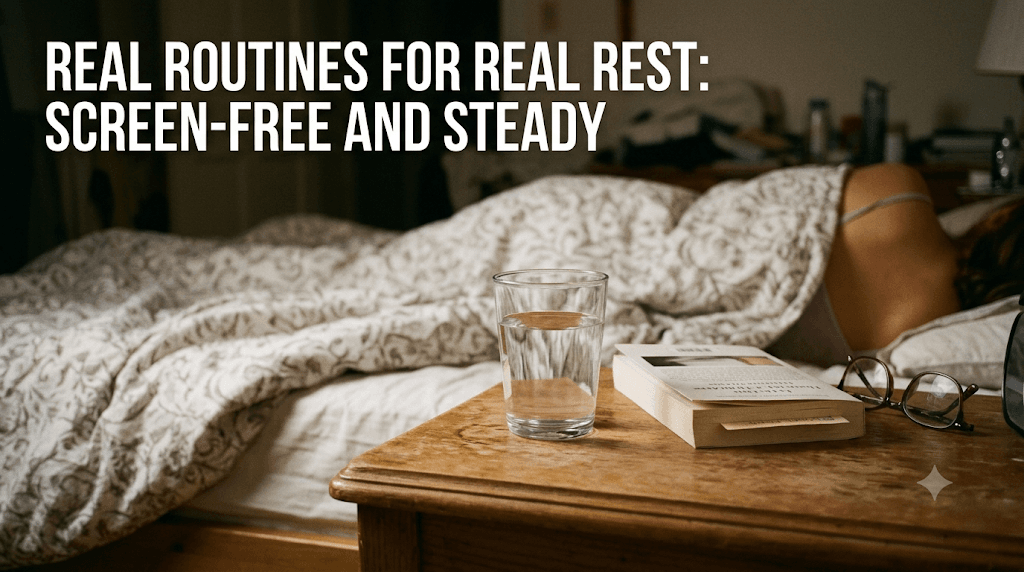
[3] The Strengthening or Progression Step: The Rhythmic Diaphragmatic Sleep Breath
High cortisol levels often cause nighttime awakenings. Rhythmic Diaphragmatic Breathing (belly breathing) is a gentle exercise that strengthens the diaphragm, optimizes oxygen, and stimulates the vagus nerve to reduce stress hormones.
Step-by-Step Guide to Belly Breathing:
- Settle into a comfortable, secure position in your bed, lying on your back with your eyes softly closed.
- Place one hand gently flat on your chest, and place your other hand flat on your lower abdomen, just right below your ribcage.
- Inhale slowly and quietly through your nose for a slow count of 4. Focus entirely on making the hand on your stomach rise, while the hand on your chest stays completely still. This ensures you are breathing deeply into your lungs, not shallowly into your chest.
- Hold that breath gently in your lungs for a brief, relaxed count of 2.
- Exhale smoothly and completely through parted lips for a slow count of 4, feeling the hand on your abdomen sink down naturally toward the mattress.
- Repeat this rhythmic cycle 8 to 10 times consecutively, keeping your focus purely on the rising and falling movement of your hands.
Critical Safety Guardrails:
Perform this exercise while lying down or seated securely. Never force your breath; if you feel lightheaded, return to your natural breathing pattern. The goal is relaxation, not strain.
[4] The Environmental Alignment: The Cool-Room Thermal Strategy
Aging affects internal temperature regulation. While you may feel cold initially, deep sleep requires your core temperature to drop by about two degrees. A room that is too warm prevents this cooling, leading to fragmented sleep.
Step-by-Step Environmental Adjustments:
- Set your home thermostat to a cool, consistent range between 65 and 68 degrees Fahrenheit (18 to 20 degrees Celsius) before you go to bed.
- Replace heavy, heat-trapping synthetic blankets with breathable, layers of natural fibers, such as 100% cotton or bamboo sheets.
- If your feet feel cold when you first get into bed—which can frustratingly delay your sleep—wear a pair of loose, warm, breathable cotton socks. This warms your extremities, dilates your blood vessels, and helps your core temperature drop faster.
[Conclusion & Daily Encouragement]
Consistent, gentle habits are more effective than pharmaceutical fixes for retraining your sleep system. By turning off screens, releasing muscle tension, and cooling your environment, you can reclaim your vitality and live life on your own terms.
Your 3 Key Takeaways for Lasting Sleep Health:
- Protect Melatonin Safely: Turn off all bright digital screens exactly 60 minutes before bed to allow your brain to build up its natural sleep signals.
- Breathe Away Daytime Tension: Use gentle diaphragmatic belly breathing to lower your heart rate and clear cortisol from your body before trying to sleep.
- Keep Your Environment Cool: Keep your bedroom thermostat set to a cool 65-68°F and use loose socks if your feet feel cold to assist your body’s natural temperature drop.
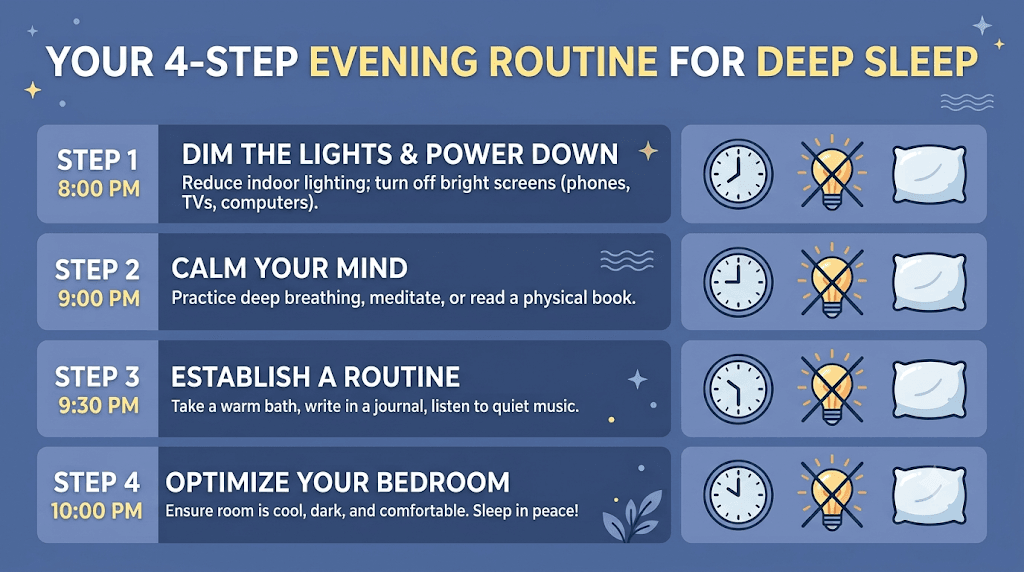
YOUR 4-STEP EVENING ROUTINE FOR DEEP SLEEP:
- THE ZERO-SCREEN HOUR: OFF ALL DIGITAL DEVICES 60 MIN BEFORE BED
- PROGRESSIVE MUSCLE RELEASE: TENSE & RELEASE BODY TENSION IN BED
- BELLY BREATHING: 8 CONTROLLED DIAPHRAGMATIC SLEEP BREATHS
- THERMAL STRATEGY: KEEP BEDROOM COOL BETWEEN 65 AND 68°F”