
Protect Your Ears, Save Your Brain:
Table of Contents
Hearing Loss and Dementia
Untreated hearing loss is the #1 modifiable risk factor for dementia. Taking care of your ears keeps your brain active, prevents social isolation, and protects your precious memories.

1. The Biological Gateway: How Your Ears Protect Your Brain
Is turning up the TV volume or asking people to repeat themselves just a natural part of getting older? While common, science now reveals that these are more than just auditory shifts—they are early warning signs for your neurological health. Our ears do not just capture sound; they provide the constant electrical stimulation that keeps the brain’s processing centers robust and healthy.
When we ignore gradual hearing loss, we aren’t just missing out on bird songs or conversations; we are effectively “starving” the brain of the data it needs to stay sharp. This lack of input initiates a cascade of physical changes in the brain’s structure, making hearing health one of the most critical, yet frequently overlooked, defenses against memory loss and mental decline.
By simply protecting and treating our hearing, we can actively shield our brains from cognitive decline.
2. A Global Scientific Consensus: The Lancet Commission Report
The 2024 Lancet Commission on dementia prevention, intervention, and care has delivered a powerful message: hearing loss in mid-to-late life is the single most impactful “modifiable” risk factor for dementia. This means that unlike age or genetic history, your hearing is something you can actively manage to change your health trajectory.
The data is compelling: treating hearing loss could potentially prevent or delay approximately 8% of all dementia cases globally. This is a larger impact than reducing smoking, physical inactivity, or high blood pressure, highlighting that the path to a healthier brain truly begins with your ears.
As hearing worsens, the risk of dementia escalates dramatically:
- Mild hearing loss: Doubles your risk (2x).
- Moderate hearing loss: Triples your risk (3x).
- Severe hearing loss: Increases your risk by five times (5x).
3. The Threefold Threat: Why Silence Weakens the Mind
- ① Cognitive Load (The “Overworked Brain”): When hearing is impaired, the brain must divert immense neural resources just to fill in the gaps of garbled speech. This “listening effort” drains energy from the prefrontal cortex—the area responsible for executive function and working memory—leaving you mentally exhausted and less able to process complex information.
- ② Structural Atrophy (The “Use It or Lose It” Principle): Without consistent auditory stimulation, the parts of the brain that process sound (the temporal lobe) begin to physically shrink. Because these auditory regions are deeply interconnected with the hippocampus—the brain’s memory center—this atrophy can accelerate the overall loss of brain volume associated with Alzheimer’s disease.
- ③ Social Disengagement: Struggling to follow conversations in noisy environments often leads to “social withdrawal.” This isolation deprives the brain of the complex, real-time problem-solving required during social interaction. Loneliness is a known physiological stressor that further accelerates cognitive decline and emotional distress.
4. The Evidence for Action: Insights from the ACHIEVE Trial
Can intervention truly reverse these risks? The Aging and Cognitive Health Evaluation in Elders (ACHIEVE) study, the largest clinical trial of its kind, provided a definitive answer. Researchers followed hundreds of older adults, comparing those who received hearing technology and counseling to those who received general health education.
The findings were groundbreaking: in adults at higher risk for cognitive decline, using hearing aids for just three years reduced the rate of cognitive change by nearly 50%. This proves that hearing aids are not just about volume; they are sophisticated medical tools that maintain the neural pathways necessary for memory, focus, and logical reasoning.
Simply wearing a modern hearing aid can cut your rate of memory loss nearly in half.
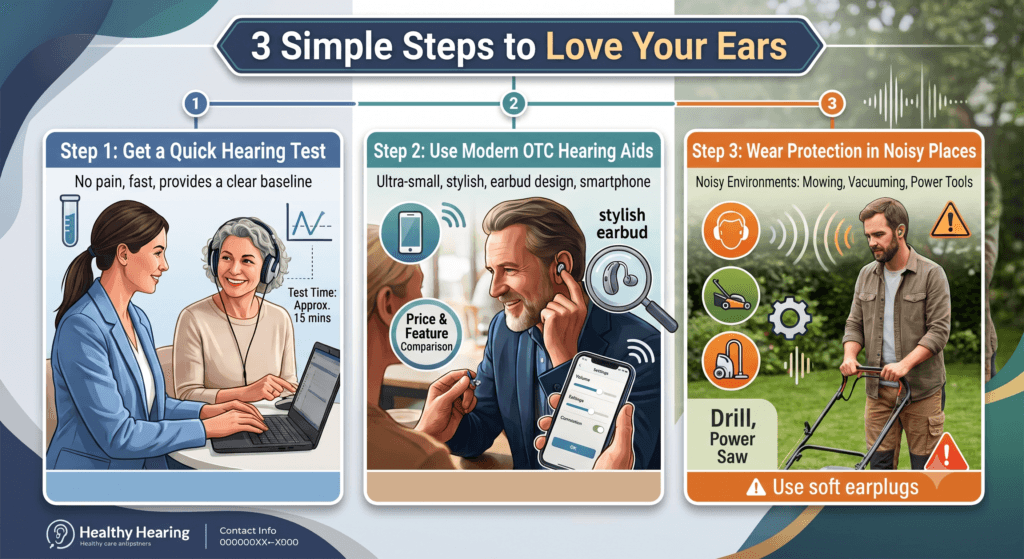
5. Your Brain Health Roadmap: Three Steps to Better Hearing
- Baseline Assessment: Schedule a professional audiogram. Much like checking your blood pressure, knowing your hearing threshold allows you to catch “hidden hearing loss” before it impacts your brain structure. If you aren’t ready for a clinic, many reputable apps offer validated screening tests to start your journey.
- Embrace Modern Technology: Explore the new generation of Over-the-Counter (OTC) hearing aids. These devices are discreet, often rechargeable, and use advanced AI to filter out background noise while enhancing speech. They integrate seamlessly with smartphones, allowing you to stream calls and adjust settings with total privacy.
- Active Protection Strategy: Prevention is just as vital as treatment. Keep high-fidelity earplugs on your keychain for concerts, sporting events, or even noisy restaurants. At home, reduce the “noise floor” by using quieter appliances and taking “quiet breaks” to allow your auditory system to recover from daily stimulation.
[Editor’s Choice: Healthy Aging Partners]
- Sony CRE-C10 Self-Fitting OTC Hearing Aid
- Quick Review: A virtually invisible, high-quality OTC hearing aid. Easily self-fits via smartphone app for crystal-clear conversations.
- Mack’s Ultra Soft Foam Earplugs (50 Pair)
- Quick Review: Super soft, USA-made foam earplugs protecting delicate aging ears from loud household noises (NRR 33dB).
[Editor’s Choice: Healthy Aging Partners]
- Sony CRE-C10 Self-Fitting OTC Hearing Aid
- Quick Review: A virtually invisible, high-quality OTC hearing aid. Easily self-fits via smartphone app for crystal-clear conversations.
- Mack’s Ultra Soft Foam Earplugs (50 Pair)
- Quick Review: Super soft, USA-made foam earplugs protecting delicate aging ears from loud household noises (NRR 33dB).
[Legal & Advertising Disclaimer]
- Medical Disclaimer: The information on PrimeLife Health News is for educational purposes only and is not professional medical advice. Always consult with a qualified physician or audiologist regarding hearing loss or cognitive concerns.
- Affiliate Disclosure: PrimeLife Health News participates in affiliate advertising programs, including the Amazon Services LLC Associates Program, and displays third-party ads. Clicking these links or making purchases may earn us a small commission at no extra cost to you, which helps support our free health news service.