Stable Blood Sugar with Every Meal: The Power of Eating Sequence for Seniors
Table of Contents
Summary
Changing your eating sequence is just as important as what you eat. By simply shifting your mealtime habits to enjoy veggies first, proteins second, and carbs last, you can prevent exhausting blood sugar spikes, boost your daily energy, and protect your long-term health without giving up your favorite foods.
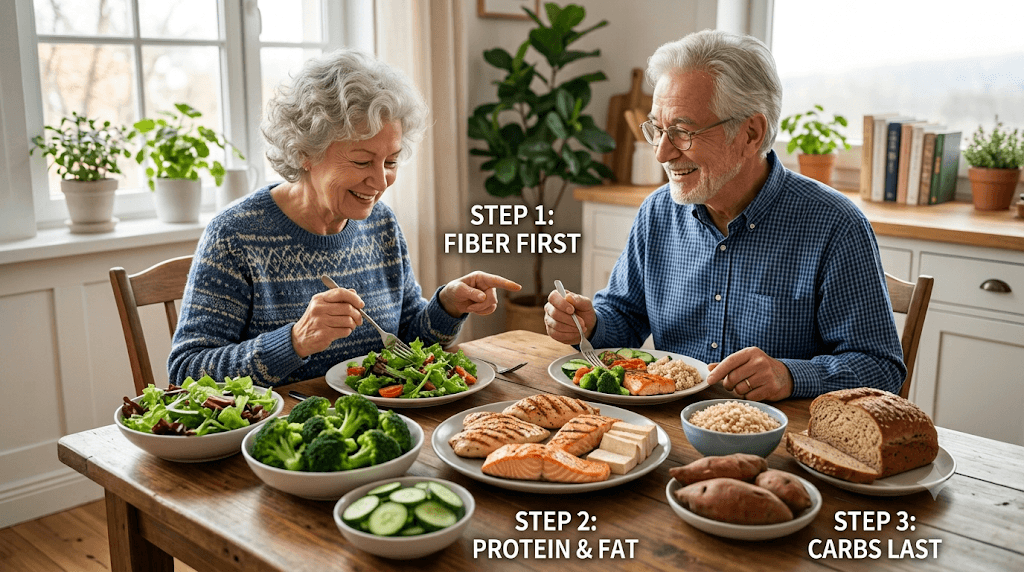
Simple 3 Steps : 1. Fiber First 2.Protein & Fat 3.Carbs Last
The Simple Secret Hidden in Your Dinner Plate
As we celebrate our 60s and beyond, our bodies naturally become a bit slower at processing sugars. You might have noticed feeling incredibly sleepy, sluggish, or even a little dizzy about an hour after a hearty lunch. This isn’t just everyday tiredness; it is often a “blood sugar roller coaster” at work.
When we eat rice, bread, or potatoes first, our digestive system rapidly turns them into glucose, causing a sudden spike in blood sugar. Your body then rushes to pump out insulin to crash that sugar back down, leaving you feeling drained. The good news is that you do not need to strictly ban your favorite carbohydrates or count every single calorie to stop this cycle. The ultimate solution lies in a beautifully simple habit change: altering the order of the food you put into your mouth.
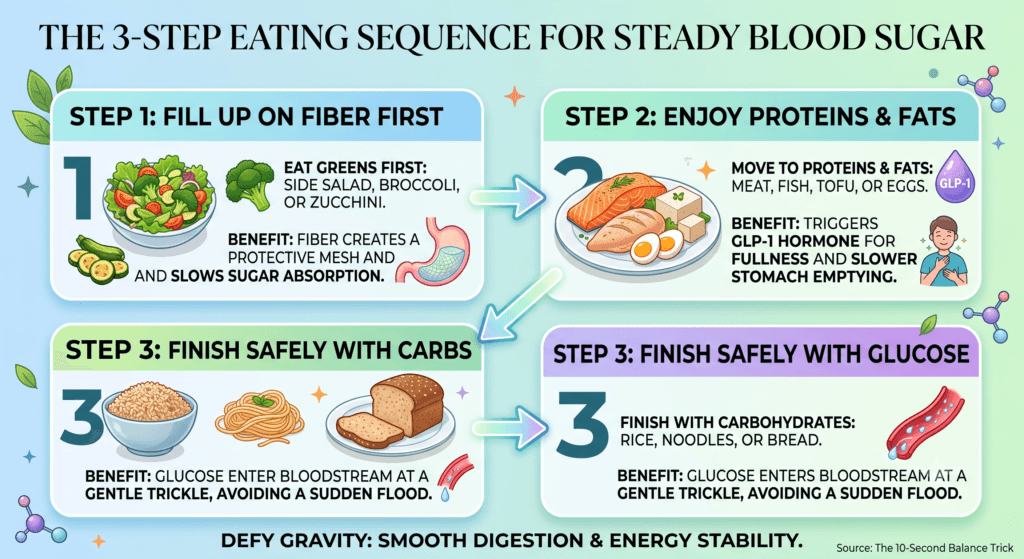
The 3-Step Sequence: Fiber, Protein, then Carbs
Think of your digestive system as a neatly organized highway. If you send the fast cars (carbohydrates) out first, they cause a massive traffic jam and a speed spike. Instead, we want to lay down a smooth, protective pace car first.
- Step 1: Fill Up on Fiber First (Vegetables & Salad)
Start your meal by eating your greens. Whether it is a side salad, steamed broccoli, or sautéed zucchini, eat these first. Fiber acts like a gentle, natural mesh inside your stomach. It slows down the speed at which your body absorbs sugars later in the meal, keeping your levels wonderfully steady.
- Step 2: Enjoy Your Proteins and Fats (Meat, Fish, Tofu, & Eggs)
Next, move on to your main protein source—like a piece of baked salmon, tender chicken, or savory tofu. Protein triggers the release of a special hormone called GLP-1. This clever hormone naturally slows down stomach emptying, which makes you feel comfortably full and satisfied much longer.
- Step 3: Finish Safely with Your Carbohydrates (Rice, Bread, & Pasta)
Finally, it is time for your rice, noodles, or bread. Because the fiber and protein have already created a soft cushion in your stomach, the glucose from these carbs enters your bloodstream at a slow, gentle trickle rather than a sudden flood. You get all the comfort of your favorite comfort foods without the energy crash.
Real Benefits for Your Vibrant Daily Life
Adopting this gentle habit does so much more than just look good on a medical chart. Within just a few days of switching to a fiber-first sequence, you will likely notice a wonderful lift in your everyday energy. You will no longer feel that overpowering urge to take a heavy nap right after eating, giving you more freedom to enjoy afternoon walks, gardening, or playing with grandchildren.
It is a deeply empowering way to take control of your wellness, proving that small, stress-free changes in our daily routines can yield the most profound results for our longevity.
Conclusion
By simply eating your vegetables first, proteins second, and carbohydrates last, you can effortlessly smooth out your blood sugar levels. This easy, restriction-free habit change keeps your daily energy high and protects your long-term health with every single bite.
🛒 Recommended Wellness Supports (Amazon Affiliate)
- Organic Psyllium Husk Powder: An excellent, easy-to-mix soluble fiber supplement to enjoy before meals if fresh vegetables aren’t readily available.
- Premium Apple Cider Vinegar Capsules: A gentle, senior-friendly supplement known to help support healthy digestion and glucose metabolism when taken alongside a balanced meal sequence.
Disclaimer: The information provided in this article is for educational purposes only and is not intended as medical advice. Please consult with your physician or a certified healthcare provider before making any significant changes to your diet or chronic disease management plan.